We talk a lot about strategy, skills, and systems. But what if the most under-leveraged tool you have isn’t an app or agenda — it’s the lens through which you see your own potential?
That’s the fresh perspective we’re bringing today. And it starts with a concept you’ve probably heard of — but may not have dived deeply into yet.
Most people hear “fixed vs. growth mindset” and think: negative vs. positive attitude. But that framing misses the point entirely — and honestly, it’s why so many people check the box and move on without anything actually changing.
This isn’t about how optimistic you sound in a meeting. It goes deeper. It’s about what you believe is possible for yourself.
- Fixed mindset: What I have is what it is. More effort, outside input, or a new strategy won’t move the needle.
- Growth mindset: What I have is a starting point. Effort, feedback, and intentional strategy can change what I’m capable of.
One treats your abilities as a ceiling. The other treats them as a floor. That’s not a small distinction — that’s everything.
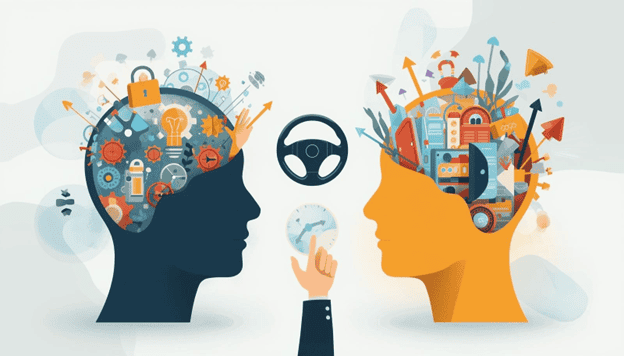
Here’s the take most conversations skip: You don’t have a fixed or growth mindset. You have both — simultaneously — because that’s how the human brain actually works.
Your left brain plays the role of protector: keeping you safe, risk-averse, and within familiar boundaries. Your right brain is the explorer: generating possibilities, fueling creativity, pushing past the comfortable. Neither is the villain. But one of them is probably running the show more than you realize.
The fresh question isn’t which mindset you have. It’s which one you’re handing the wheel to — and whether that’s a conscious choice or simply a default you’ve never examined.
So how do you know who’s driving? Here are three signals that your growth mindset is at the wheel:
- You’ve learned to tell “can’t” from “won’t.” This one’s underrated. When you hear yourself say “I can’t do that”— stop and actually question it. Is it truly about ability? Or is it about motivation, fear, or simply not wanting to? That gap between can’t and won’t is where a lot of untapped potential quietly lives.
- You have a healthy relationship with your strengths and weaknesses. You acknowledge weaknesses without using them as a permanent excuse. You own strengths without downplaying them. And you stay curious about which ones can be exercised, stretched, and built over time.
- You show up to conversations to learn, not just to be heard. Instead of waiting for your moment to demonstrate what you already know, you get genuinely curious. Because a fresh perspective — even from an unexpected source — can unlock something no amount of solo thinking would get you to.
And here’s perhaps the freshest take of all: Growth mindset isn’t a personality trait. It’s not something you either lucked into or didn’t. Neuroscience tells us the brain is far more adaptable than we once believed — which means you can choose to rewire toward growth through deliberate, repeated behavior.
It takes intentional effort at first — and then, over time, it will become your default.