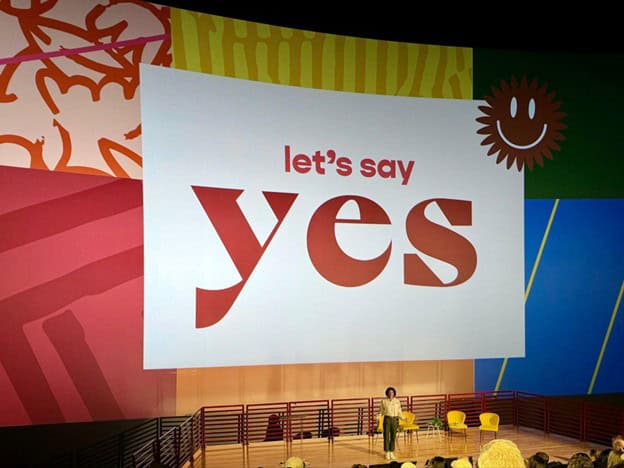
YES.
That one word can open the door to everything.
Yeses are magical experiences like car rides with the tops down, ice cream from the “ice cream man”, and impromptu road trips.
And yeses are iconic moments like those first childhood sleepovers and prom dates and marriage proposals and job interviews.
But what if your best “yes” is still out there, just waiting to happen? And it’s magical, and it’s iconic. And it involves (dare I say it) your workplace? And the dividends are endless?
It sounds too good to be true, doesn’t it?
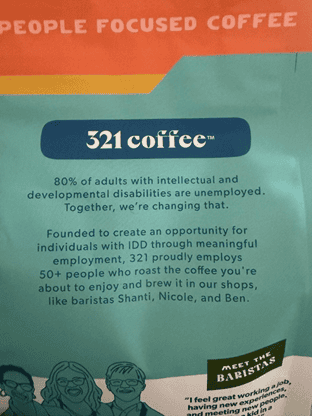
But then, you haven’t met Lindsay Wrege. Lindsay is the Co-Founder of 321 Coffee, a coffee shop and roaster whose business is entirely based around the inclusion of workers with intellectual and developmental disabilities (IDD).
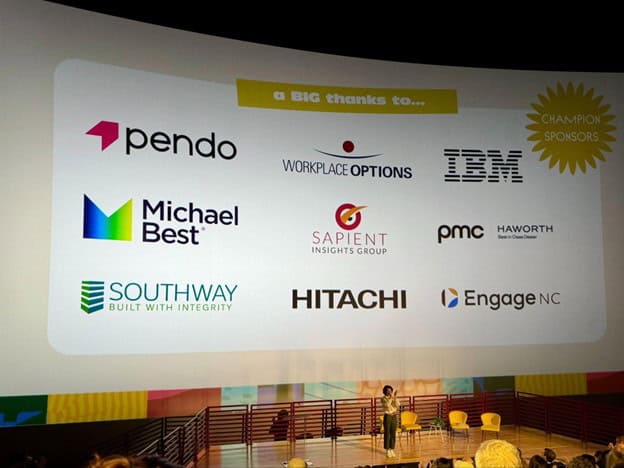
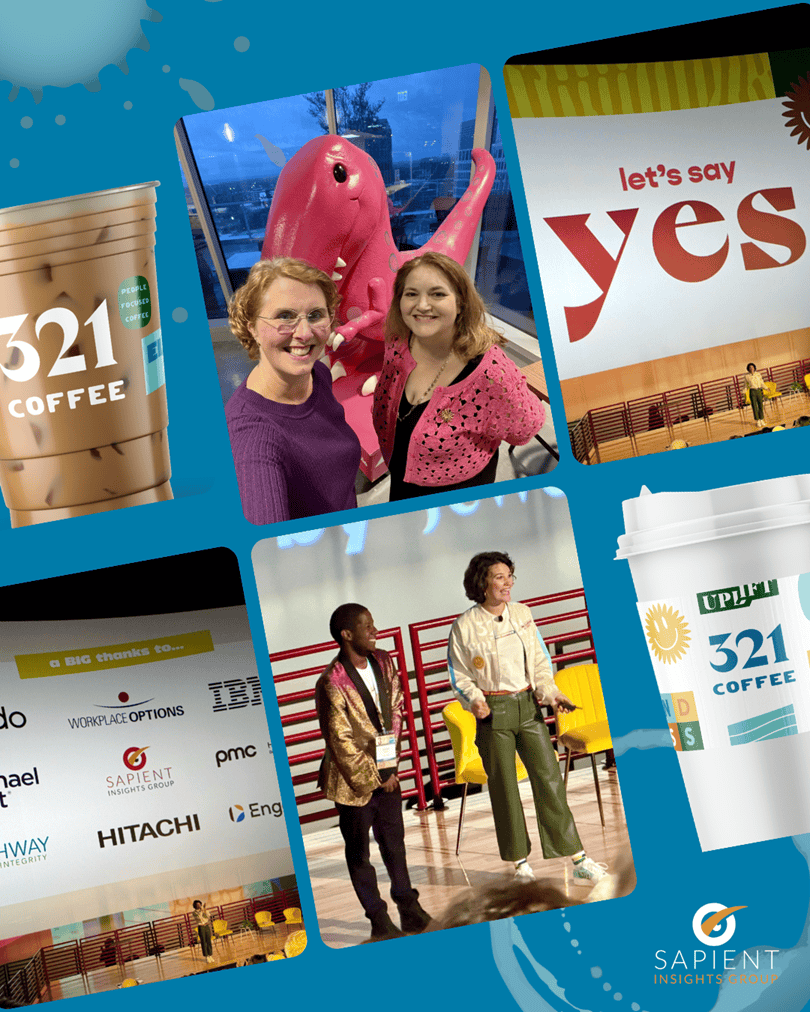
Sapient Insights Group is thrilled to be one of the Champion Sponsors of 321 Coffee’s recent 321 Day Conference (March 21st is World Down Syndrome Day because people with Down Syndrome have 3 copies of chromosome 21), which brought to light the Why and the How of inclusion in the workplace. While we’re grateful for the opportunity to support Lindsay in sharing her important message with the community each year, it truly feels like a must-attend for every HR professional. It was an incredibly moving experience. There wasn’t a dry eye in the room, and we were thankful the event organizers provided small packs of tissues in the goodie bags.
The WHY for having to advocate to include people with IDD is heartbreaking. Did you know that 80% of people with IDD are not employed? And for the 20% that are, it’s frequently menial tasks that they are employed to do. Now imagine that’s your son. Your daughter. Your childhood friend. 321’s goal is to change that. One YES at a time.
At 321 Coffee, that means that the roasting, coffee making, order taking, register, and everything else is done by a workforce with IDD. Lindsay and the other 321 Day speakers each shared with us their personal experiences; that these workers show up on time, they stay in their jobs, they are dedicated, they perform well, and they value having value.
UKG’s 2025 Global Study of the Frontline Workforce found that 76% of workers report being burned out. And those burned-out workers reported that they are less productive (84%), they make mistakes (72%), they call out sick (45%), and they start looking for other jobs (41%).
It’s clear from their findings that burnout and schedule instability have a very real impact on worker productivity and corporate bottom lines.
On the flip side, statistically, employing individuals with IDD is just good business. According to Disability Solutions, employees with disabilities have a 40% lower turnover rate. And Walgreens, which has employed hundreds of people with IDD, adds that, within their program, turnover for people with IDD is 48% lower than the rest of the workforce, while medical costs are 67% lower and time-off expenses are 73% lower!
Some of 321’s employees had the opportunity to share with us why employing people with IDD is good for the individual. How this job gave them the independence they had never had before. That they’ve developed a network of friends, and a connection to their community. But when your dreams are powered by “yes”, there really is no limit, and one 321 employee is now an international speaker, while another is experiencing the best that dorm life has to offer at NC State in their Elevate program (more on that later).
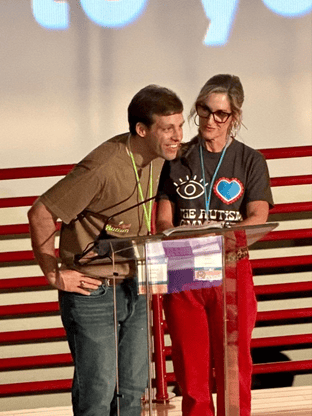
But there’s another factor. A less tangible one. The one that hits you in “the feels” and that will reward you and your company endlessly for just saying “yes”.
EVERYONE loves them! 321 has satellite locations in 3 corporate buildings downtown, and those employees gushed about their relationships with these workers. In fact, one office has seen their FRIDAY in office attendance numbers double because of the 321 location that’s there on Fridays. Relias employees are actually choosing to go to the office to work-just to hang out with the coffee folks!
Which brings us to the “How”. Lindsay gave all of us 3 action items. First, get to know someone new. One of Lindsay’s best friends from childhood has Downs, so seeing her friend’s struggles was the catalyst for Lindsay and her Co-Founder, Michael Evans, to take action. Seeing the person first, and then seeing their challenges is key. The person has to be the focus.
That’s what Michael emphasized in his presentation on “How to Design Systems that Solve & Evolve”. Maybe you’ve heard the adage about people and systems. In the software and AI realm, it’s likely to go, “People fail, systems don’t.” But that’s not the sentiment Michael prefers. In a world that advocates for inclusion, compassion, understanding, and the acknowledgement that we are all human, Michael shared with us this quote instead: “People don’t fail systems, systems fail people.”
So, as an HR professional, how do you keep that from happening? Look at your universal design and make sure it is simple, flexible, and tolerant. If it’s not, fix the system, not the person, because when push comes to shove, inclusion is a design choice. Michael’s examples from their business model show how easy inclusion is. To keep things simple, they color code things-from the containers the beans are stored in to the final bags the coffee is packaged in. To meet the differing needs of their workforce, they have machines with more than one way to achieve the same outcome, allowing for flexibility in the process, but consistency in the product. Tolerance comes in knowing you aren’t going to get it right the first time. Like Edison with the lightbulb, it’s not failure, it’s a learning opportunity. And even when you finally get it working, there’s always room for improvement. As Michael said, you will need to Design, Observe, and Adjust. At 321, they’ve gone through 3 different coffee bag designs, and 10s of thousands of bags to find one that meets the needs of their workforce and their equipment.
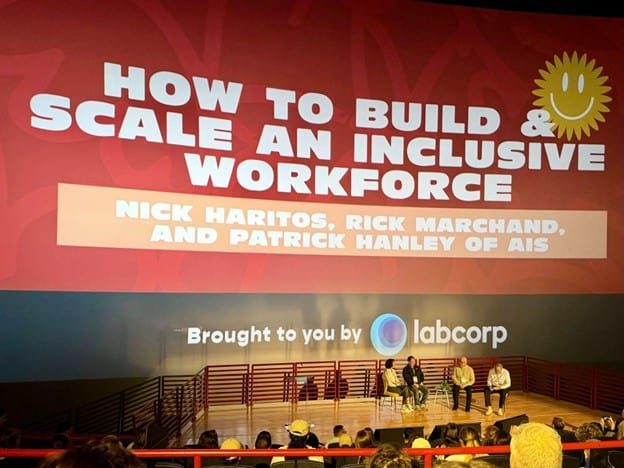
After Michael asked us to rethink our design, Lindsay encouraged us to challenge your assumptions. Nick Haritos, the President and CEO of AIS in MA, shared how his entire work perspective has changed because of their Radiance inclusion program that they have in place in their furniture factory. He shared that giving back to the community was always important to AIS, but they wanted to do something to really make a difference, so they began a program for people with IDD working on making drawers for their furniture. It has been profoundly successful, employing over 250 people with IDD, and Nick has gone from looking forward to retirement in a few years to feeling like they will have to “drag him out of the building” when it’s time for him to leave. Which speaks to the unexpected benefit of an IDD workforce-it can prove a way to keep and engage top talent looking to retire by providing a new opportunity to invest their strengths and knowledge by mentoring this diverse group of workers.
But to do that, you have to say “YES”, which was Lindsay’s third action item. Those “yeses” can be small, like the local Construction Service company, which shared the success story of the one worker with IDD they’ve hired who “runs the place” when the field managers are off-site. Or they can be HUGE, like Debbie Antonelli’s polite but insistent leveraging of her basketball career to open the door for the creation of NC State’s Elevate Program, allowing individuals with IDD to get an academic collegiate experience and develop skills for independent living, social engagement, and employment. Tanner Smith, a young man whose joy is so very contagious, graduated from a similar program at Clemson. Tanner works at The Shepherd Hotel in South Carolina, whose inclusive workforce is fueled by kindness and puts a smile on everyone’s face, and he related to us how his job has helped him achieve the goal of living independently.
While all the speakers at 321 Day emphasized the human element as the most important reason for inclusion, it’s worth mentioning that for some organizations, there has been a long-standing tax credit incentive via the Work Opportunity Tax Credit (WOTC). The WOTC is a federal tax credit available to employers for hiring and employing individuals from certain targeted groups that face significant barriers to employment. Other grants and subsidies may be available as well.
As an HR professional, hiring the right person for the job is always the goal. But if one simple “yes” could fill the position AND reduce churn, support inclusion, and strengthen and promote a vibrant corporate culture? That just seems like the best “yes” ever. Say “yes” to inclusive hiring at your company starting today!
Written by: Amy Anthony